
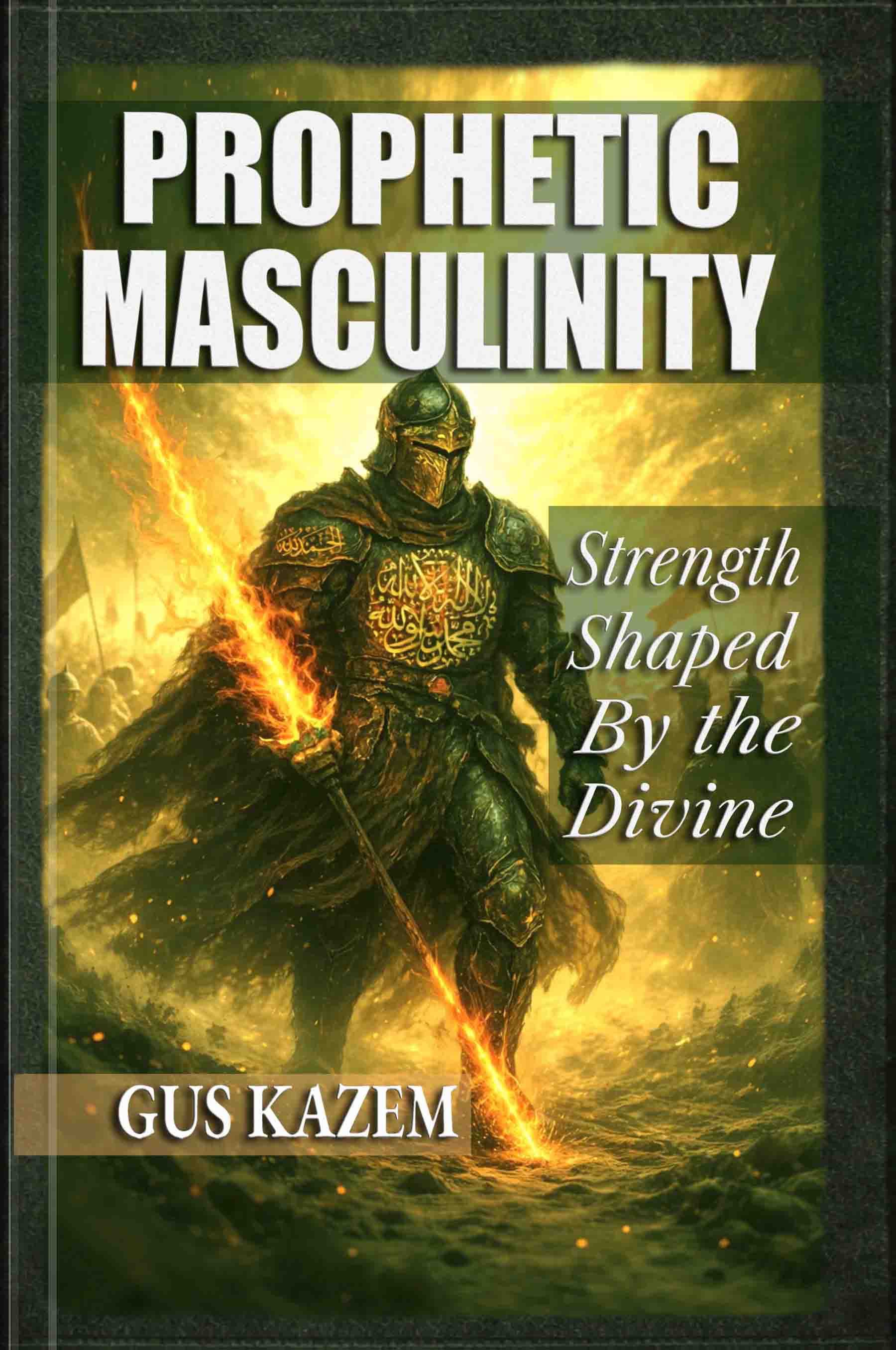
Prophetic Masculinity
Prophetic Masculinity: Strength Shaped by the Divine. This book is not a defense of masculinity, nor an argument against its modern critics. It is a reconstruction. Drawing directly from the live pattern of the Prophets and their companions, it restores masculinity as a discipline of responsibility rather than a performance of power. Across fifteen chapters, the book dismantles prevailing models of manhood shaped by reaction, desire, validation, dominance, and visibility. In their place, it presents a prophetic framework grounded in obedience, restraint, patience, mercy, and accountability before God. Masculinity here is not discovered through debate or optimized through appetite, but formed under command and proven through what a man is willing to refuse, carry, and answer for when no one is watching. The text moves deliberately from false measures to divine forming and finally to prophetic embodiment, tracing how youth is disciplined before authority is entrusted, how strength is refined through waiting, how power is restrained by mercy, and how manhood is completed in solitary accountability before the Lord. Key concepts such as rijāl, shabāb, and futuwwa are translated into clear moral language without dilution, abstraction, or cultural apology. This is not a motivational book, a cultural critique, or a philosophical treatise.
Author: Gus Kazem

Book Details
| Title | Prophetic Masculinity |
| Author | Gus Kazem |
| Category | Spiritual Self-Help/ Self-Help |
| Availability | Paperback, Hardcover, and E-book editions |
| Meta data | Age: 10+ | Pages: 78 | English | Size: 6 x 0.2 x 9 in | 6.1 Oun | ISBN: 9798902800040 |
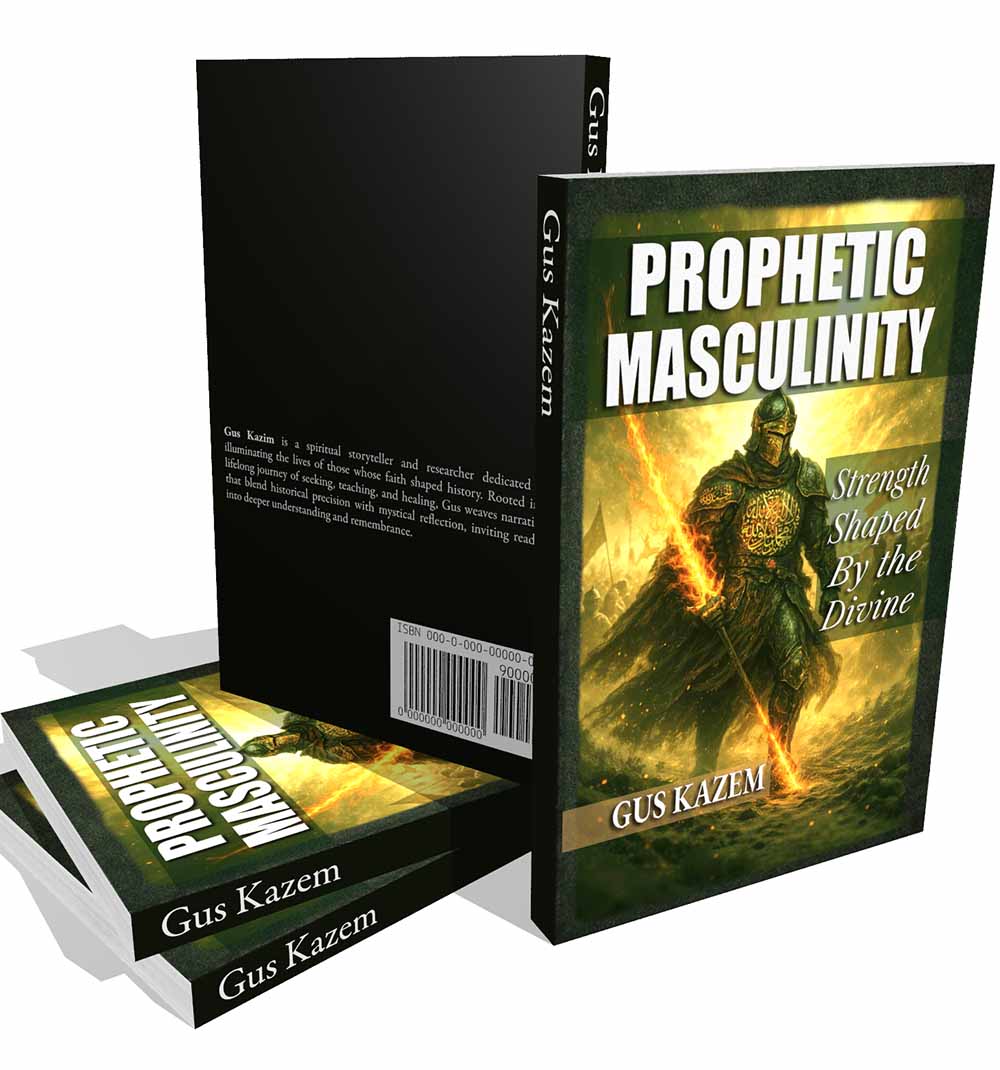 Paperback
 Hardcover
Available at Retailer
 Amazon
 Google Books
 Apple Books
 Barnes & Noble
  Everand
  Thalia
  Kobo
Kobo  Smashwords
  Vivlio
  Fable
Fable  Bookshop.org

About the Author
Gus Kazem is an author and independent publisher whose work focuses on lives shaped under pressure, where belief, discipline, and memory persist without permission. His writing moves between historical record and narrative reconstruction, attending closely to what survives when official history falls silent. His work does not seek to dramatize suffering or resolve it into comfort. Instead, it documents continuity how faith is practiced quietly, how order is preserved internally, and how meaning endures within systems designed to erase it. Research, restraint, and fidelity to source material guide both his writing and editorial decisions.
Rate this book
Tell us what you think.